Subscribe to Iterative Insights, the newsletter that helps you get smarter about being a founder in Southeast Asia.
We're trying a small number of in-person interviews in Singapore* — where you'll hear back from us on the day itself.
We often get asked what founders can expect in Iterative's 12-week program. Here's a breakdown.
We put together a group of investors who invest at different stages, are actively investing despite market conditions and are the type of investors we would have wanted. It’s called SEA Checks and here’s how it works.
Companies in our batch program have gone on to raise over $160M after graduation. Here are four key things we teach in the program to help founders successfully fundraise.
What do we look for when deciding to invest in startups?
The most important thing for a startup, and by extension the engineers at the startup, is iteration speed.
It's a persistent question founders ask themselves - and the most difficult to answer.
How are founders in Southeast Asia defining product market fit?
Your top questions on validation, answered in videos.
How to validate your startup idea? We've compared the five common methods: what they are, how they compare to one another, and how you can use them.
Partner at AC Ventures, oversees the SE Asia Mobility Fund. Was the co-founder of Rukita, where he scaled the company to its first $3M revenue. He's also the Visiting Parter for Iterative's W23 batch.
Having started 2 companies and personally invested in a few dozen more, I thought I was reasonably familiar with how startup investments were structured and what deal terms were common. That changed when I moved back to Southeast Asia. I started seeing deal terms I had never seen before or had mostly disappeared in San Francisco (SF).
Read this before applying to Iterative, where we break down some of our questions in the application form.
Accelerators are often thought of as only being helpful with early stage companies but founders of seed stage companies have found our program helpful. Here's how.
Product market fit has no set definition - how are investors in Southeast Asia defining it?
We think it's instructive to share our rejection reasons - and hopefully it'll help founders better communicate why they are great founders with good ideas.
Our first AMA, where Hsu Ken answered the questions founders had on how to grow your startup.
Thomas Jeng is the General Manager of Aspire, a leading fintech startup based in Singapore. He was previously the Head of Sales there, leading the firm's expansion across Singapore and Southeast Asia.
Jessica Chao is a Visiting Partner at Iterative, where she leads healthcare investments. She's also a Venture Partner at SVLC, a Latin America focused venture fund, as well as a Biotech Advisor to Berkeley SkyDeck, UC Berkeley’s official startup accelerator.
Exploring the unspoken emotional journey that comes with fundraising: rejections, and what founders' fundraising processes were like and how they handled rejections.
In this episode, we invited Yolanda Lee back to the Iterative Podcast to discuss exactly this: how to find confidence as a female leader.
We asked our founders from the Summer 2022 batch: "What's the most surprising thing about being a founder?" Here's what they had to say.
Eric Dadoun is the co-founder of DeZy, a crypto-enabled high yield savings platform that simplifies decentralised finance.
David Marquez is the CTO of Shipmates, a courier platform that connects online stores to different couriers.
Adrien Jorge is the Founder and CEO of Propseller, a tech-powered real estate agency offering the most reliable way to successfully and efficiently sell, buy or rent a property.
The most common advice when starting a company is “do things that don’t scale,” and that’s absolutely right. But at some point, if you’re successful, you need to stop doing things that DON’T scale and start doing things that DO scale.
Meet the 15 companies across Southeast Asia that we're excited about.
To grow the GDP of Southeast Asia, we need more startups. If we view startup creation as a funnel, there’s significant drop-off at the last step: people with startup ideas who don’t start a startup.
We’re thrilled to introduce Iterative’s Winter 2025 batch - meet all 21 of them in this article.
We're excited for you to meet our Summer 2024 batch, comprised of 15 amazing companies! This batch, we’ve raised the bar even higher, with the acceptance rate dropping to 1.8% from 2.7% in Winter 2024.
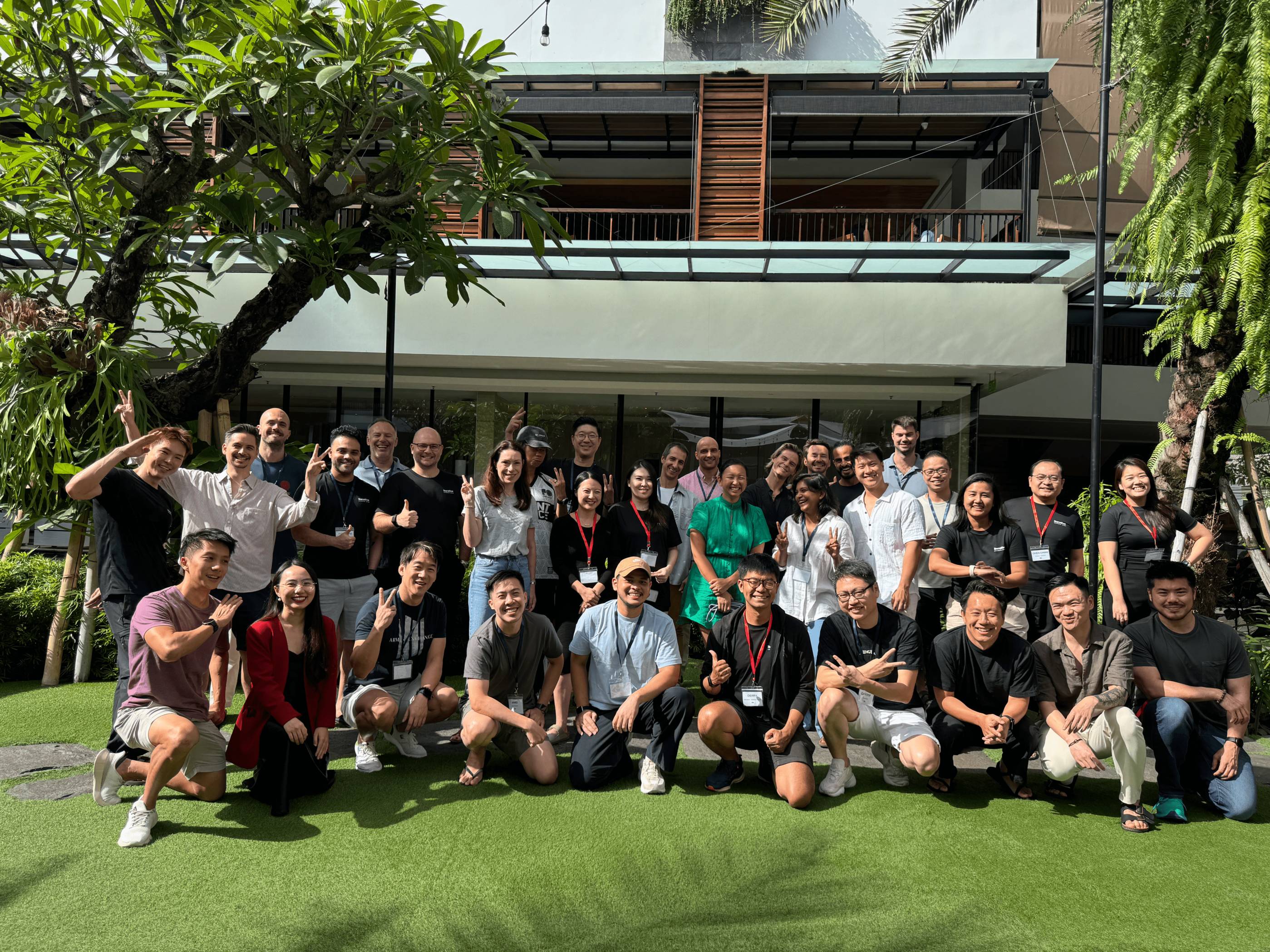
We're excited to announce the very first Iterative Founders Retreat. It’s open to all Iterative Founders from any batch. If you’re from one of the first 6 batches who didn’t get an in-person orientation, this is your chance.
Upcoming 2-week cohort-based program: Should You Start a Startup? Everything you need to know about starting a startup to make an informed decision. Sign up by 25 August 2024.
Introducing the Iterative Scout Program, a new initiative designed to streamline the process of discovering the next Iterative Founders by enabling existing Iterative Founders.
For a startup to be successful, it needs to be solving an important problem.
Here are the 3 questions I ask myself when trying to answer this question and what to do about it.
Fundraising is slow right now. My hunch is fundraising both will pick up in the second half of this year. Here's why.
Interestingly enough, 'product market fit' is a term often used by founders starting out but almost never by more experienced founders. Why?
A year ago, I wrote our first Request for Startups - and I'm revisiting the themes again to see what I got right or wrong.
A common question we get is: “Which is more important in fundraising: a strong story or strong traction?” But what is a strong story and strong traction — and why are they important?