Subscribe to Iterative Insights, the newsletter that helps you get smarter about being a founder in Southeast Asia.
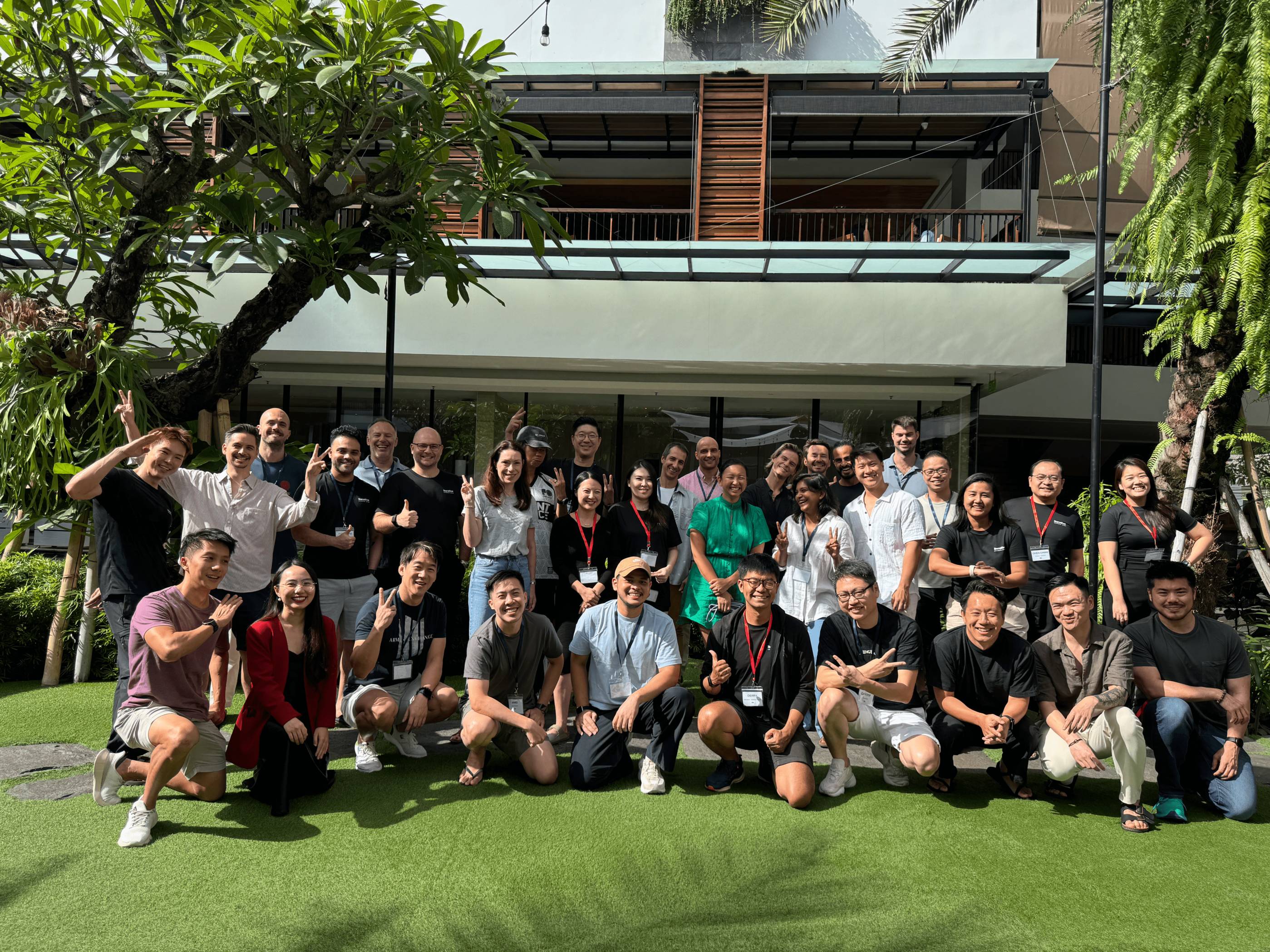
Iterative's Winter 2026 batch, our 12th since 2020, is one we're really proud of. Out of 1,000+ applications and hundreds of hours of interviews, we picked eight companies we just couldn't say no to.
Issa Compass is building the missing layer: a system that turns immigration into something legible.
The most common advice when starting a company is “do things that don’t scale,” and that’s absolutely right. But at some point, if you’re successful, you need to stop doing things that DON’T scale and start doing things that DO scale.
Meet the 15 companies across Southeast Asia that we're excited about.
To grow the GDP of Southeast Asia, we need more startups. If we view startup creation as a funnel, there’s significant drop-off at the last step: people with startup ideas who don’t start a startup.
At Iterative, we invest across a wide range of sectors, backing the best ideas we believe will drive Southeast Asia’s growth. In the coming years, we see AI not just accelerating existing industries, but fundamentally redefining how we work and how entire industries are built. Below is a list of startup ideas we’re excited about in Southeast Asia. Some are areas we've already invested in and want to double down on. Others are wide open — and you could be among the first to build them.
We’re thrilled to introduce Iterative’s Winter 2025 batch - meet all 21 of them in this article.
At Iterative, we have invested in 15 healthcare companies over the past four years, and we continue to actively seek out more innovative opportunities. With the growing aging population, limited doctor-to-patient ratio, and significant gaps in access to quality care across much of Southeast Asia (SEA), we believe there are numerous untapped opportunities for healthcare founders in the region.
We're excited for you to meet our Summer 2024 batch, comprised of 15 amazing companies! This batch, we’ve raised the bar even higher, with the acceptance rate dropping to 1.8% from 2.7% in Winter 2024.
We're excited to announce the very first Iterative Founders Retreat. It’s open to all Iterative Founders from any batch. If you’re from one of the first 6 batches who didn’t get an in-person orientation, this is your chance.
Upcoming 2-week cohort-based program: Should You Start a Startup? Everything you need to know about starting a startup to make an informed decision. Sign up by 25 August 2024.
We asked Shiyan Koh, the Managing Partner of the Hustle Fund, and Hsu Ken Ooi, Managing Partner of Iterative, to give their take on how founders in Southeast Asia should tackle fundraising in this current climate.
Not all capital is equal. What are some of the things founders need to look out for when fundraising?
The key things founders should keep in mind (like the questions you should be asking, and what good investors look like) when raising capital.
What does the economic downturn mean for founders in Southeast Asia who are looking to fundraise? Shiyan Koh from the Hustle Fund and Hsu Ken Ooi from Iterative shares more in this podcast.
From raising money to getting investors to talk to them to making negotiations.
From services for the middle class to the search for acquisition channels, here are major trends ready for innovation in Southeast Asia
Copying ideas from other markets: the good, the bad and the how
In this episode of The Iterative Podcast, Hsu Ken and Brian talk about why hiring is important, why most founders get it wrong, what hiring is like as your startup grows, what to qualities and roles to hire for and more. This is Part 1 of 3 episodes on recruiting.
An obvious but overlooked difference between founders and investors is, founders are concerned with how to make their startup successful, and investors are concerned with how to tell if someone else’s startup will be successful. I find that thinking of each startup as a line, is a helpful mental model for assessing whether they will be successful.
This is part 3 of a 3 part series on how to build a recruiting machine. This last part will wrap up the series with how to think through compensation and negotiations to close candidates as well as onboard them effectively.
Kum Hong is a business leader, GM and angel investor. He spent 10 years at Airbnb, starting as the APAC General Counsel before transitioning to run business and operations as the APAC Regional Director in 2017. Three years later, he was appointed as COO for Airbnb China.
Thomas Jeng is the General Manager of Aspire, a leading fintech startup based in Singapore. He was previously the Head of Sales there, leading the firm's expansion across Singapore and Southeast Asia.
Jessica Chao is a Visiting Partner at Iterative, where she leads healthcare investments. She's also a Venture Partner at SVLC, a Latin America focused venture fund, as well as a Biotech Advisor to Berkeley SkyDeck, UC Berkeley’s official startup accelerator.
Exploring the unspoken emotional journey that comes with fundraising: rejections, and what founders' fundraising processes were like and how they handled rejections.
In this episode, we invited Yolanda Lee back to the Iterative Podcast to discuss exactly this: how to find confidence as a female leader.
We asked our founders from the Summer 2022 batch: "What's the most surprising thing about being a founder?" Here's what they had to say.
Eric Dadoun is the co-founder of DeZy, a crypto-enabled high yield savings platform that simplifies decentralised finance.
David Marquez is the CTO of Shipmates, a courier platform that connects online stores to different couriers.
Introducing the Iterative Scout Program, a new initiative designed to streamline the process of discovering the next Iterative Founders by enabling existing Iterative Founders.
For a startup to be successful, it needs to be solving an important problem.
What do we look for when deciding to invest in startups?
The most important thing for a startup, and by extension the engineers at the startup, is iteration speed.
Here are the 3 questions I ask myself when trying to answer this question and what to do about it.
Fundraising is slow right now. My hunch is fundraising both will pick up in the second half of this year. Here's why.
Interestingly enough, 'product market fit' is a term often used by founders starting out but almost never by more experienced founders. Why?
A year ago, I wrote our first Request for Startups - and I'm revisiting the themes again to see what I got right or wrong.
A common question we get is: “Which is more important in fundraising: a strong story or strong traction?” But what is a strong story and strong traction — and why are they important?