Subscribe to Iterative Insights, the newsletter that helps you get smarter about being a founder in Southeast Asia.
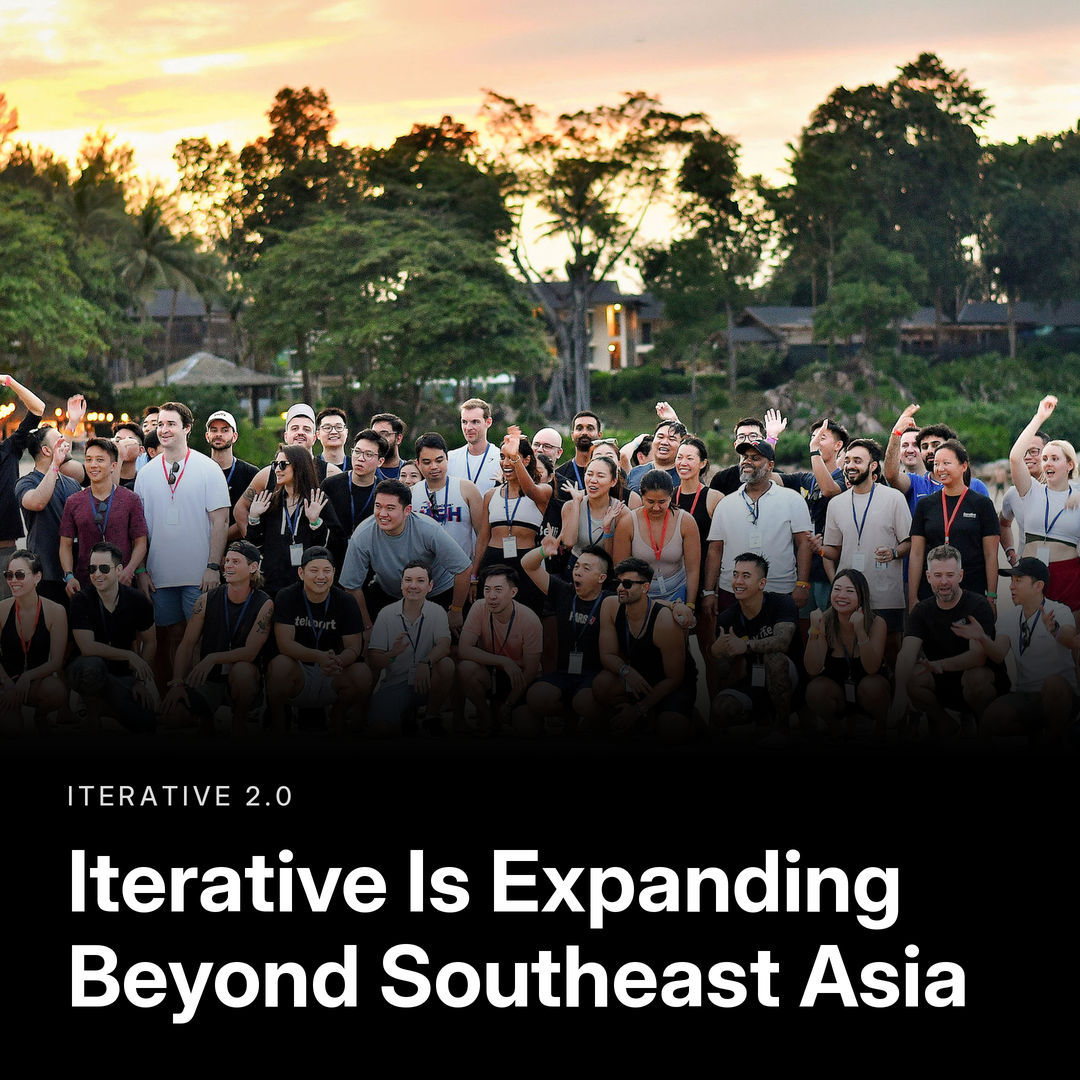
Iterative is expanding beyond Southeast Asia.
David Marquez is the CTO of Shipmates, a courier platform that connects online stores to different couriers.
Adrien Jorge is the Founder and CEO of Propseller, a tech-powered real estate agency offering the most reliable way to successfully and efficiently sell, buy or rent a property.
Yolanda Lee is the Co-Founder of Uncommon (Iterative Winter 2022), a Singapore-based private network for female leaders. Uncommon redefines professional development for female leaders through a powerful and trusted network of peers, group coaching, tailored masterclasses, 1:1 connections virtually and in person.
Alvin Ea is the Co-Founder of Haulio (Iterative Summer 2020), a Singapore-based container haulage platform, with the greater vision of connecting global trade to local first-mile transportation across ASEAN.
Liyen Tan is the Co-Founder of Hawkr (Iterative Summer 2021), a Malaysia-based food delivery marketplace for homemade food that is looking to reduce barriers to entry for anyone passionate about making a living through cooking and/or baking.
Part of our philosophy to fundraising is to talk to as many investors, in the shortest amount of time possible. In technical terms, you want to fundraise in parallel not serially. To achieve this, you need to be organized. Like all good sales teams (fundraising is sales), we use a CRM. Over the years, we’ve developed a template we used at our startups and now use with companies in the batch
We’re excited to announce the Visiting Partners for the upcoming Summer 2022 batch. They will be sharing their experience and insights with Iterative’s early-stage companies. They will host individual office hours, group office hours and help companies get ready for demo day.
We like to write a request for startups before the start of each batch. We’re surprised by the number of founders who don’t apply because they think we wouldn’t be interested in their idea and end up applying after reading our post.
Charles Lee is the Co-Founder of Coderschool (Iterative Winter 2021), a Vietnam-based edtech startup that is training and educating a whole generation of coders and data scientists through its courses.
During our program, we expect and help startups to grow 5% to 7% every week. Growing 5% a week for a year results in 12.6x annual growth. Growing 7% a week for a year results in 33.7% growth. That’s our benchmark for fast growth. To achieve this level of growth, the first thing we do is have every company create a metrics scorecard based on a template we used at our companies. It’s surprisingly simple but effective.
Read this before applying to Iterative, where we break down some of our questions in the application form.
Accelerators are often thought of as only being helpful with early stage companies but founders of seed stage companies have found our program helpful. Here's how.
It's a persistent question founders ask themselves - and the most difficult to answer.
How are founders in Southeast Asia defining product market fit?
Your top questions on validation, answered in videos.
How to validate your startup idea? We've compared the five common methods: what they are, how they compare to one another, and how you can use them.
Product market fit has no set definition - how are investors in Southeast Asia defining it?
We think it's instructive to share our rejection reasons - and hopefully it'll help founders better communicate why they are great founders with good ideas.
Our first AMA, where Hsu Ken answered the questions founders had on how to grow your startup.
In the world of startup fundraising, mistakes are costly. While a mistake can look different for different investors, there are common threads in the VC industry.
Issa Compass is building the missing layer: a system that turns immigration into something legible.
Partner at AC Ventures, oversees the SE Asia Mobility Fund. Was the co-founder of Rukita, where he scaled the company to its first $3M revenue. He's also the Visiting Parter for Iterative's W23 batch.
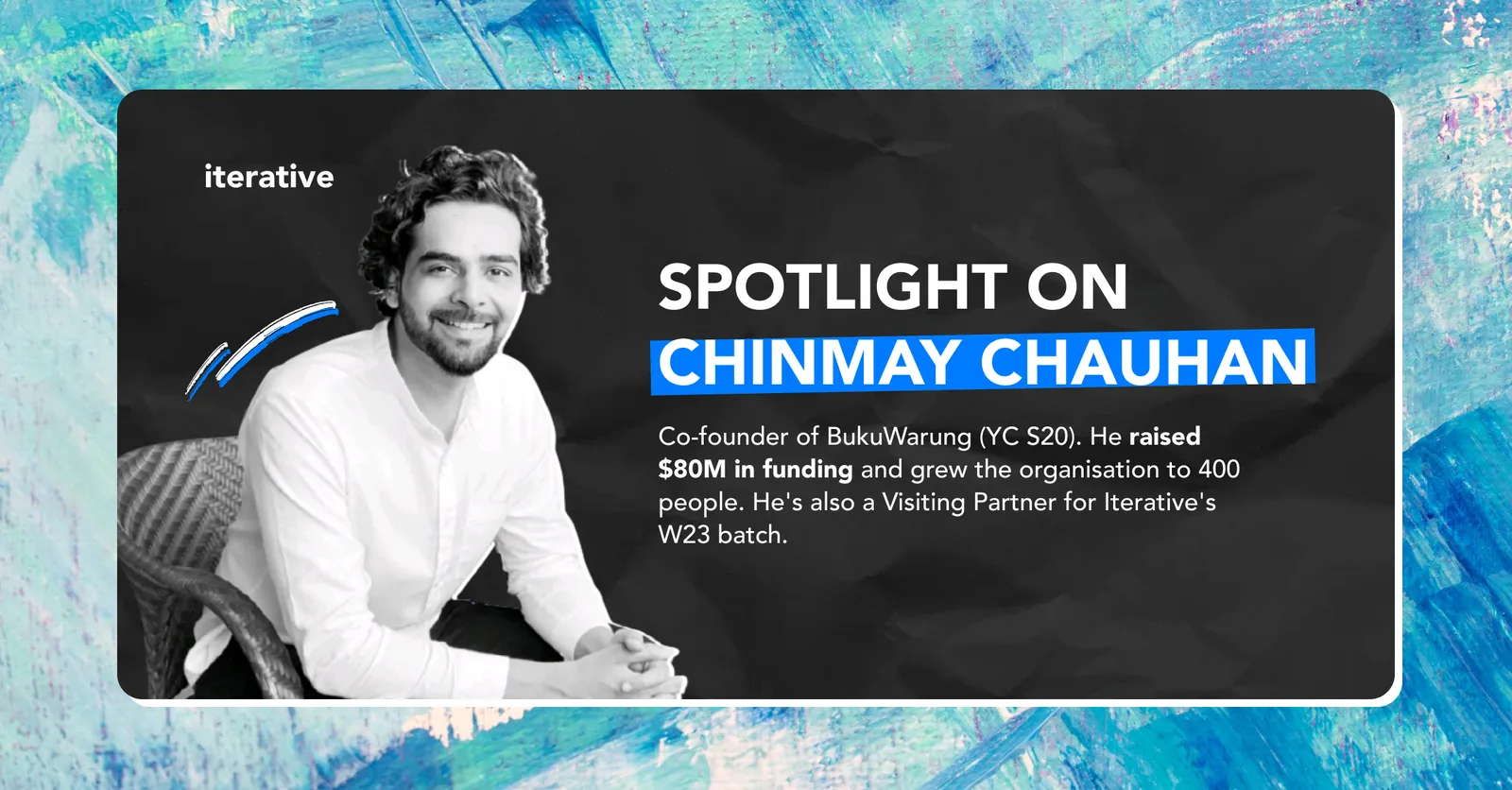
Chinmay Chauhan is the co-founder of BukuWarung (YC S20). He raised $80M in funding and grew the organisation to 400 people. He's also a Visiting Partner for Iterative's W23 batch.
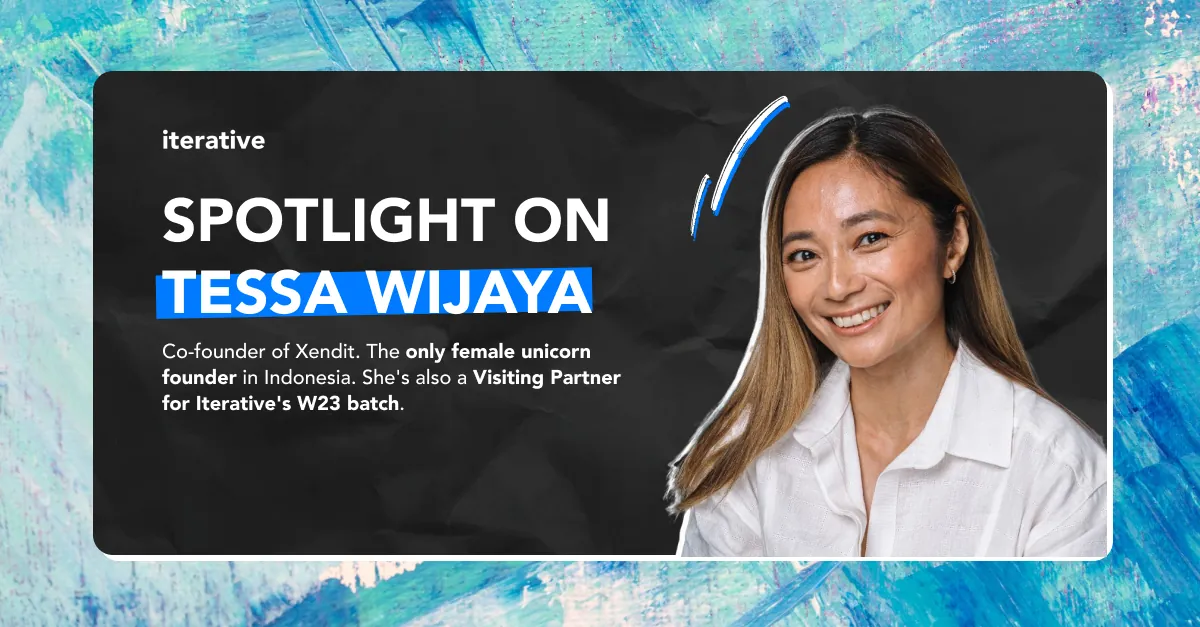
Tessa Wijaya is the Co-Founder and COO of Xendit, a leading payment gateway in Indonesia, the Philippines, and Southeast Asia. Xendit became a unicorn in 2021, making Tessa the only female unicorn founder in Indonesia.

How do you get to 100 *paying* customers? We asked three of our Iterative founders, and here were their answers.

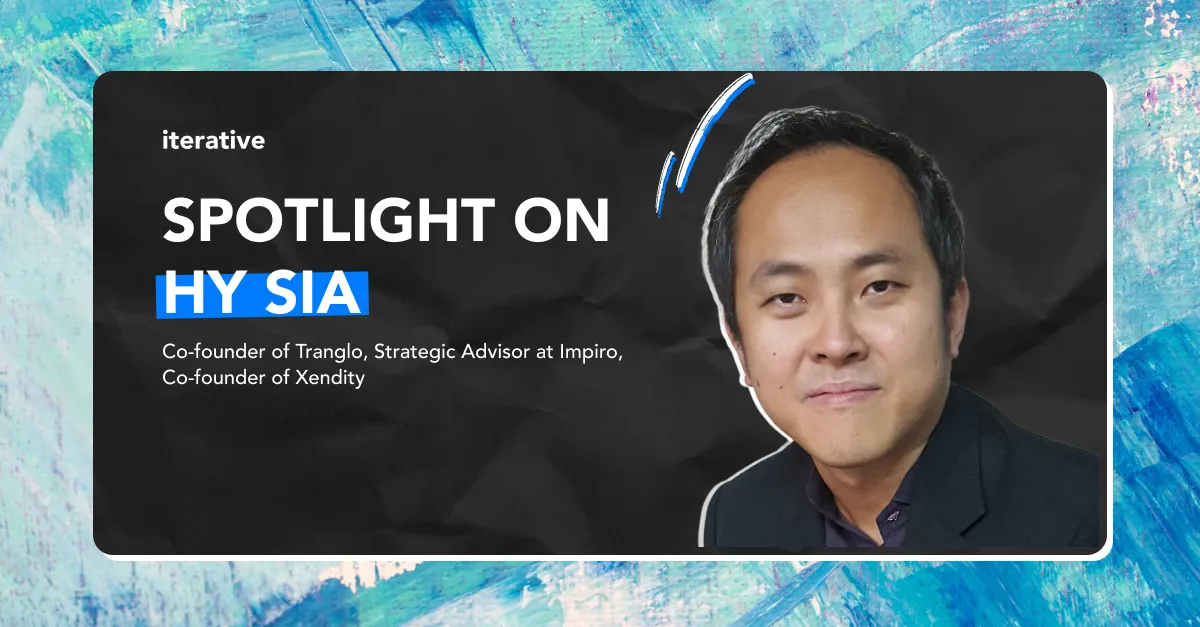
Sia is the co-founder of Tranglo in 2008, a payment processing company that powers the last-mile cross-border payout for various banks and fintechs globally. In 2021, Ripple purchased a 40% stake in Tranglo for an undisclosed amount.
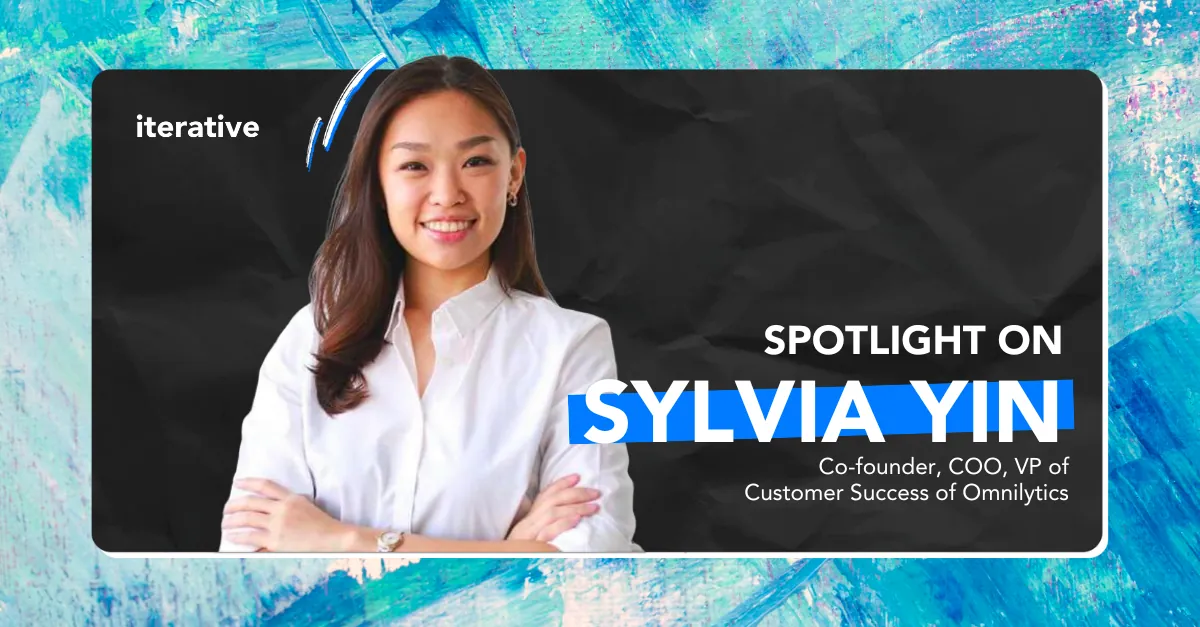
Before Iterative, Sylvia was the co-founder of Omnilytics, a retail insights platform. At Omnilytics, Sylvia led Customer Success, growing NRR to >100% and serving global clients like Uniqlo, Lenzing, and Lidl.
We've asked some of our portfolio founders on their experiences doing office hours during their time in the batch - and what they've learned.
With the launch of Fund II, we have plans to back 100+ more companies in Southeast Asia, across various stages.
If I could only teach one thing to future and current founders, it would be how to validate startup ideas. Sign up for the validation program.
Fundraising is a skill and we want to teach founders how to get good at it.
We're in our third year running Iterative, but it feels like we're just getting started. This will be our fifth batch of companies for Summer 2022 - and our biggest one yet.
Iterative is excited to host online office hours for startup founders every Friday. Office hours are 20-minute sessions between you and one of our partners, where they help you with your startup as much as they can.
We’re inviting former founders to work with and advise Iterative companies during Summer 2022. Visiting partners will host their own office hours, work with companies in group office hours and help companies prepare for Demo Day.
We are increasing the size of our investments from US $150,000 for 10% to be between US $150,000 and US $500,000 for roughly 10%.
For a startup to be successful, it needs to be solving an important problem.
What do we look for when deciding to invest in startups?
The most important thing for a startup, and by extension the engineers at the startup, is iteration speed.
Here are the 3 questions I ask myself when trying to answer this question and what to do about it.
Fundraising is slow right now. My hunch is fundraising both will pick up in the second half of this year. Here's why.
Interestingly enough, 'product market fit' is a term often used by founders starting out but almost never by more experienced founders. Why?
A year ago, I wrote our first Request for Startups - and I'm revisiting the themes again to see what I got right or wrong.
A common question we get is: “Which is more important in fundraising: a strong story or strong traction?” But what is a strong story and strong traction — and why are they important?